
Seattle tech worker therapy is mental health counseling shaped around the pressures and schedules of technology roles, with the aim of helping workers manage stress, set clearer boundaries, and function more sustainably. In 2026, the right fit accounts for changing workloads, remote or hybrid routines, performance pressure, and the need for privacy without assuming every tech worker has the same experience.
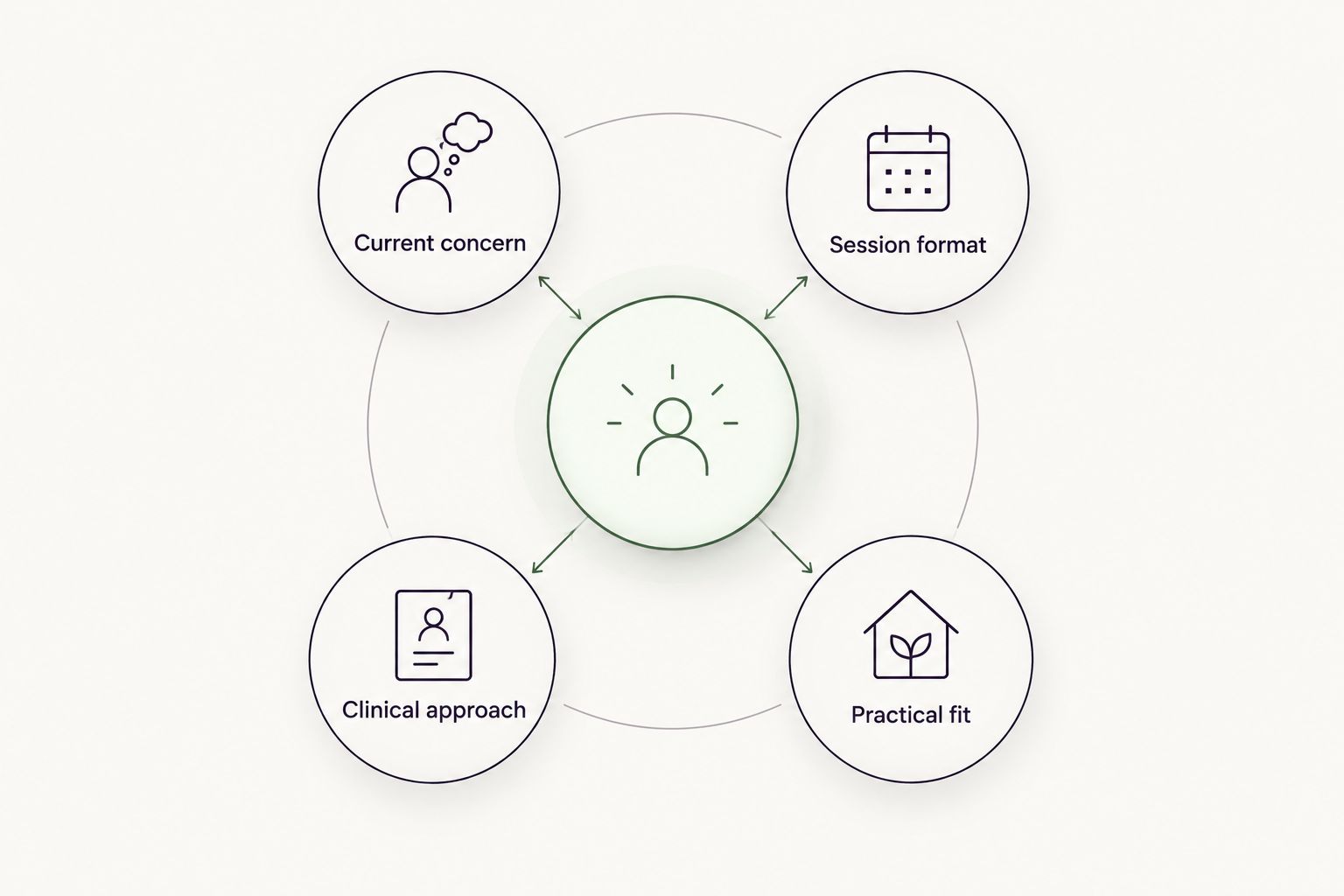
- Therapy for Seattle tech workers should fit the worker’s schedule, current concerns, and preferred session format.
- CBT is best for examining thought patterns, while DBT teaches practical emotional regulation and interpersonal skills.
- Telehealth reduces travel demands; in-person counseling creates a clearer separation from work and home.
- Verify clinician credentials, session fees, insurance arrangements, and cancellation terms before committing in 2026.
Why therapy matters for Seattle tech workers
Technology work can combine unclear priorities, concentrated periods of effort, frequent organizational change, and communication across teams or time zones. Therapy provides a private setting to examine how those conditions affect thoughts, emotions, relationships, sleep, decision-making, and boundaries.
The goal is not to label every difficult week as a mental health condition. It is to notice persistent patterns and decide whether professional support would be useful. A Seattle tech worker might seek counseling for anxiety, low mood, perfectionism, conflict, grief, identity questions, relationship strain, or a difficult work transition.
Structured approaches can make therapy feel more concrete. For example, this guide to CBT techniques for managing anxiety explains how thoughts, feelings, and behaviors can reinforce one another. That framework may appeal to people who prefer observable patterns and practical exercises, but therapy does not need to resemble another optimization project.
In 2026, the most useful starting question is simple: what do you want to understand or handle differently? A clear answer helps you compare clinicians without expecting yourself to identify a diagnosis or select a treatment method alone.
How to choose therapy as a Seattle tech worker
Use the following steps to narrow the options without turning the search into an exhausting research project. Start manually by writing down your needs, then use a counseling practice to confirm whether its services, format, and clinical approach align with them.
Define the concern in everyday language
You do not need clinical terminology before contacting a counselor. Describe what you notice, when it appears, and how it affects daily life. A clinician can then ask follow-up questions and discuss whether their experience fits your concerns.
Avoid reducing the issue to productivity alone. Difficulty concentrating can matter, but so can feeling disconnected from relationships, carrying tension after work, or struggling to rest when no task is pending.
- Write down the situations that feel hardest right now
- Note how the pattern affects work, sleep, relationships, or routines
- Identify what you have already tried
- Choose one change that would make therapy feel useful
- Include concerns outside work rather than treating your job as the whole story
Choose telehealth or in-person counseling
Session format affects whether therapy remains practical when your schedule changes. Telehealth removes travel time and can suit people who work remotely, have variable calendars, or live outside Seattle. In-person counseling can provide a physical transition away from work and may feel more private if home is shared.
Neither format is automatically better in 2026. The better option is the one that supports privacy, attention, reliable attendance, and an honest conversation with the clinician.
- Confirm that telehealth is available where you will physically attend sessions
- Identify a private space where conversations cannot be overheard
- Account for travel and transition time when considering in-person care
- Ask whether the same format must be used for every appointment
- Decide whether being at home helps you open up or keeps you mentally at work
Assess the clinical approach
Once you understand the concern and format, compare approaches. Cognitive behavioral therapy focuses on relationships among thoughts, emotions, and behaviors. Dialectical behavior therapy includes skills for emotional regulation, distress tolerance, mindfulness, and communication. Other approaches may focus more heavily on relationships, personal history, identity, trauma, or present-moment experience.
Havencrest Wellness & Counseling offers evidence-based mental health counseling through telehealth and in-person services for clients throughout Washington state. The faster path is to share your main concerns and ask which available clinician and approach fit them, rather than trying to make that determination from modality names alone.
- Ask how the clinician usually works with your main concern
- Request a plain-language explanation of the proposed approach
- Clarify whether sessions are structured, open-ended, or a mix
- Ask what work between appointments might involve
- Treat unexplained jargon as a prompt for more questions
Verify credentials and relevant experience
A professional title alone does not tell you whether a clinician is suitable for your situation. Review the clinician’s stated credentials and areas of focus, then ask how their experience relates to what brought you to therapy.
Relevant experience does not require employment in technology. It requires the ability to understand your context without making assumptions about your income, personality, workload, identity, or career goals.
- Check the clinician’s professional credential and current status
- Ask about experience with your main concern
- Discuss any cultural, identity, or accessibility factors that affect fit
- Confirm that services are available where you reside and attend sessions
- Notice whether the clinician asks questions instead of relying on tech-worker stereotypes
Clarify costs and insurance arrangements
Therapy costs depend on the clinician, service format, and payment arrangement. Do not assume that an employer benefit, insurance plan, or reimbursement option applies. Verify each detail directly before the first appointment.
If you plan to use insurance in 2026, ask both the counseling practice and your insurer what information is needed. If you plan to pay directly, request the current fee and policies in writing so that you can make a clear decision.
- Ask for the current session fee before booking
- Verify network status directly with the insurer
- Check your deductible, copayment, and reimbursement requirements
- Review cancellation and missed-appointment terms
- Ask what documentation is available for out-of-network reimbursement
- Confirm whether telehealth and in-person sessions are handled differently
Prepare for the first appointment
The first appointment is usually a starting conversation rather than a test you can pass or fail. You can expect questions about what brought you in, relevant history, current pressures, goals, and safety. You can also ask how the clinician protects privacy and what the next phase of counseling may involve.
You do not need to provide your entire life story at once. Share enough to help the clinician understand the current concern, then decide together what deserves more attention.
- Bring a short description of the main concern
- Mention medications, prior therapy, or health factors when relevant
- Explain work demands without relying on company-specific shorthand
- Ask how progress and goals will be reviewed
- Note any question you want answered before booking another session
Review fit without grading yourself
A useful review asks whether you feel respected, understood, and able to discuss difficult material. It also asks whether the clinician can explain the direction of therapy in language that makes sense to you. Discomfort with a hard topic does not automatically mean the fit is poor, but feeling repeatedly dismissed or misunderstood deserves attention.
Give the clinician direct feedback before silently disengaging. The response to that feedback can reveal as much about fit as the original concern.
- Ask whether the goals still reflect what matters to you
- Notice whether sessions connect to the concerns you described
- Raise confusion about the approach or pace
- Discuss practical barriers before cancelling future appointments
- Consider another clinician when the relationship or expertise does not fit
Explore counseling options
Review telehealth and in-person counseling for clients throughout Washington state.
Therapy options for Seattle tech workers in 2026
The main choice is not between a universally good and bad format. It is between options with different advantages, constraints, and payment questions. Compare them against your privacy, schedule, location, and reasons for seeking support.
| Option | Best for | Main advantage | Key limitation | Cost question to ask |
|---|---|---|---|---|
| Havencrest Wellness & Counseling telehealth | Washington clients who want counseling without traveling to an office | Removes the commute and supports location flexibility within the state | Requires a private space and reliable connection | What is the current fee, and how is insurance handled? |
| Havencrest Wellness & Counseling in-person care | People who prefer a separate setting for therapy | Creates a physical boundary between the appointment and daily routines | Adds travel and scheduling constraints | What is the current fee, and which payment arrangements are accepted? |
| Independent telehealth clinician | People comparing a broader range of clinicians | Expands the search beyond a nearby office | Credentials, state eligibility, and fit still require verification | Are sessions self-pay, in-network, or potentially reimbursable? |
| Independent in-person clinician | People who prioritize face-to-face sessions near work or home | Provides a dedicated environment for the conversation | Geographic convenience can narrow the available choices | What fees and cancellation terms apply? |
| Employer-sponsored support option | Workers whose employer offers a mental health benefit | Can provide an established place to begin asking for support | Privacy, clinician choice, continuity, and eligibility vary by program | What information is shared, and what happens if ongoing care is needed? |
Havencrest Wellness & Counseling is best suited to Washington-based Seattle tech workers who want evidence-based counseling with both telehealth and in-person options. Its limitation is that the available clinician, schedule, payment arrangement, and service fit still need to be confirmed before starting.
Common mistakes Seattle tech workers make
Treating therapy like another performance system
Tracking patterns can help, but therapy is not a dashboard that must improve every week. Pressure to produce the correct insight can make it harder to discuss uncertainty, ambivalence, grief, or experiences that do not have a quick solution.
A better approach is to bring observations while allowing the conversation to change direction. Progress can include understanding a pattern, expressing a need, tolerating an emotion, or making a decision with greater clarity.
Choosing only by calendar availability
An open appointment is useful only when the clinician’s services fit the concern. Before booking, check credentials, approach, format, location eligibility, and payment details. Availability can break a tie, but it should not replace fit.
Hiding work context behind technical shorthand
A therapist does not need to understand every tool, role, or internal process. They do need enough context to understand the human impact. Explain whether an event involved uncertainty, conflict, public evaluation, isolation, overwork, or a loss of control rather than expecting technical details to tell the story.
Assuming compensation removes the need for support
Income does not determine whether stress, anxiety, grief, relationship strain, or low mood deserves attention. It can affect payment choices, but it does not invalidate the reason for seeking counseling. Avoid comparing your distress with someone else’s before deciding whether help is appropriate.
Leaving without discussing a poor fit
If something feels off, name the specific issue. You can ask for more structure, a clearer explanation, a different pace, or another focus. If the clinician cannot meet the need, that conversation can still help you search more effectively in 2026.
FAQ
What’s the best therapy for Seattle tech workers?
The best therapy for Seattle tech workers matches the person’s concern, preferred format, schedule, and clinical needs. CBT, DBT, relationship-focused work, and other evidence-based approaches serve different purposes, so discuss fit with a qualified clinician.
Is telehealth better than in-person therapy for tech workers?
Telehealth is better when travel or a changing schedule creates a barrier, while in-person counseling is better when a separate setting supports privacy and focus. Choose the format you can attend consistently and use comfortably.
How much does therapy cost in Seattle in 2026?
Therapy costs vary by clinician, format, and payment arrangement in 2026. Ask for the current session fee, cancellation policy, network status, and reimbursement documentation before booking.
Can I use insurance for therapy in Washington?
Insurance use depends on your plan and the clinician’s arrangement with that plan. Verify network status and your current benefits directly with the insurer rather than relying only on a directory listing.
How do I know whether a therapist understands tech work?
A suitable therapist asks about your specific role, pressures, relationships, and goals without relying on stereotypes. Relevant clinical experience and a willingness to understand your context matter more than fluency in workplace jargon.
Should I choose CBT or DBT for work stress?
CBT focuses on patterns among thoughts, emotions, and behavior, while DBT adds explicit skills for emotional regulation, distress tolerance, mindfulness, and communication. A clinician can help determine whether either approach fits your concerns.
What should I discuss during a therapy consultation?
Describe what brought you to therapy, how it affects daily life, and what you hope will change. Ask about credentials, clinical approach, session format, fees, insurance arrangements, privacy, and appointment policies.
Does Havencrest offer therapy outside Seattle?
Havencrest Wellness & Counseling offers in-person and telehealth mental health counseling to clients throughout Washington state. Confirm the appropriate format, current availability, and location requirements directly before scheduling.
One last thing
Do not choose a therapist solely because their website repeats technology-industry language. In 2026, the stronger signal is whether the clinician listens carefully, explains their approach clearly, respects your context, and can provide the counseling format you need.
A consultation is an opportunity to assess those points without arriving with a finalized diagnosis or treatment plan. Bring the concern in your own words, ask direct questions, and allow fit to matter as much as convenience.