
Choosing a therapy approach for a teenager means matching the method to what your teen is actually dealing with, not picking whichever name comes up first in a search. This guide walks through the best therapy options for teens in 2026 — from CBT to family therapy to telehealth counseling — so you can walk into a first conversation with a clinician already knowing what to ask.
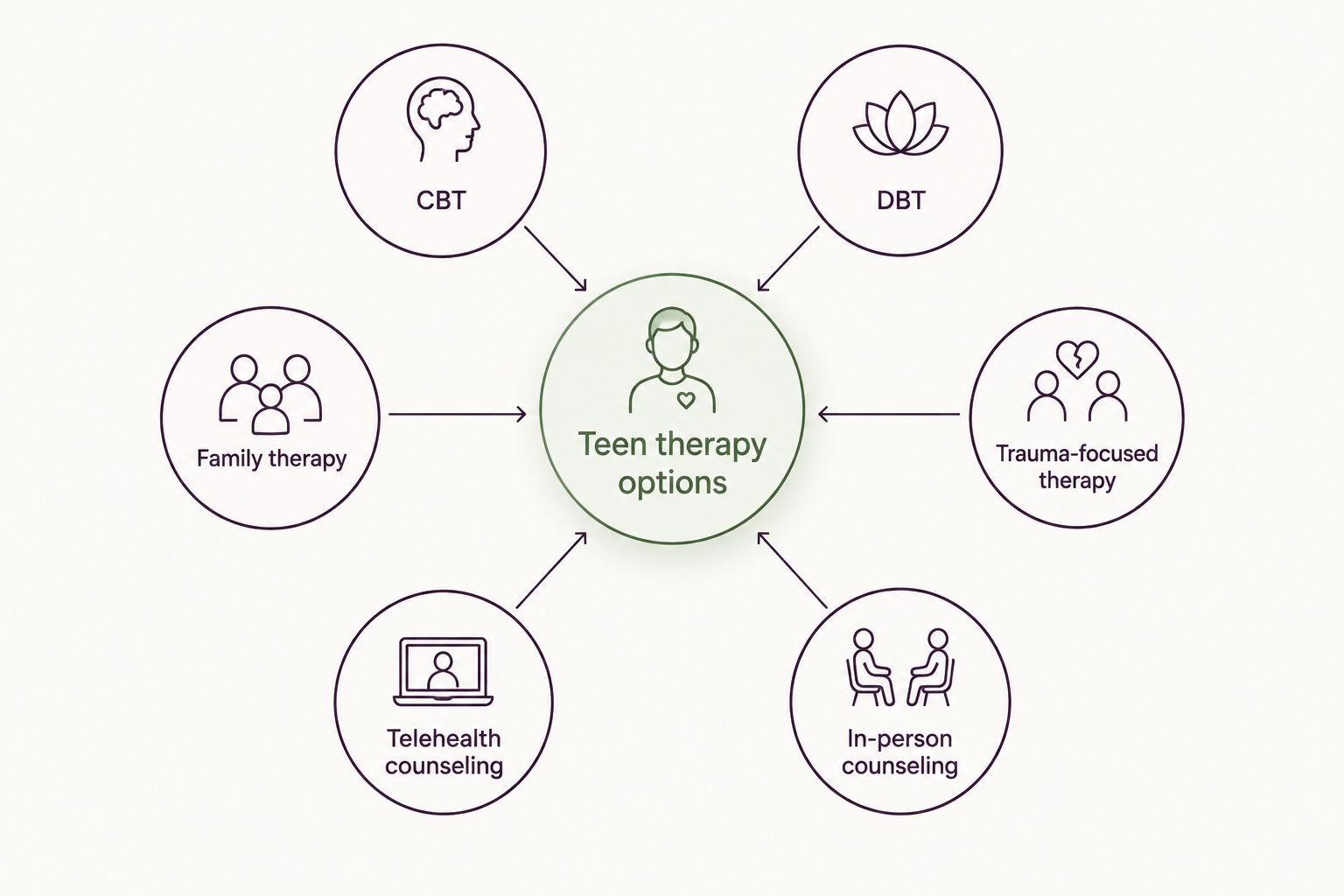
- The best therapy options for teens in 2026 include CBT, DBT, family therapy, trauma-focused therapy, and telehealth counseling.
- Cognitive Behavioral Therapy (CBT) is the most established starting point for teens dealing with anxiety or negative thought loops.
- DBT skills fit teens who feel emotions more intensely than the situation seems to call for.
- Family therapy works best when conflict shows up mainly at home, not just inside the teen.
- No single modality outperforms the others for every teen — clinician fit and consistency matter as much as the label.
Why this matters
Parents searching for teen therapy options in 2026 usually land on a list of acronyms — CBT, DBT, EMDR — with no explanation of which one applies to their situation. That gap leads to two common mistakes: picking a modality because it's the most talked about, or waiting too long to start because no option feels obviously "right."
Havencrest Wellness & Counseling works with teens and families across Washington using evidence-based approaches delivered in-person and via telehealth. None of these options is a diagnosis or a guarantee of a particular outcome — they're starting points a licensed clinician can refine once they've actually met your teen and heard what's going on.
What makes the best therapy option for a teen
- Evidence base for the specific concern — anxiety, mood, trauma, or family conflict each point toward different approaches.
- Fit with your teen's temperament — some teens want structure and homework; others want open conversation.
- How much family involvement the situation calls for — some concerns live inside the teen, others live inside the household.
- Delivery format — in-person sessions versus telehealth, based on schedule and comfort with video.
- Clinician training in the specific protocol, especially for trauma-focused work like EMDR.
- Time commitment your family can realistically sustain, including any between-session practice.
Therapy options for teens at a glance
| Option | Best for | Standout feature | Key limitation |
|---|---|---|---|
| CBT | Anxiety and negative thought patterns | Structured, skills-based sessions | Homework-heavy format doesn't suit every teen |
| DBT | Intense or fast-shifting emotions | Four skill areas plus optional skills group | Bigger time commitment than standalone therapy |
| Family therapy | Conflict and communication at home | Treats the household system, not just the teen | Needs caregiver buy-in |
| Trauma-focused therapy / EMDR | Processing a specific past event | Targets the root event directly | Requires specialized clinician training and readiness |
| Telehealth counseling | Scheduling flexibility and rural access | Sessions from any private, quiet space | Needs a reliable connection and privacy at home |
| In-person counseling | Teens who connect better face-to-face | In-room relationship building | Fixed schedule, possible longer wait times |
The table orders options by the question each one answers, not by which is objectively strongest — a teen dealing with family conflict doesn't need the same starting point as a teen processing a specific traumatic event.
1. Cognitive Behavioral Therapy (CBT): best for anxiety and negative thought patterns
CBT is structured and present-focused. A clinician helps a teen identify the specific thoughts driving anxious or negative behavior, then practice reframing them, usually with small assignments between sessions.
CBT pros:
- Highly structured, so teens know what a session will cover
- Skills-based, meaning gains carry into daily situations outside therapy
- Widely available among licensed clinicians
- Works well as a shorter-term approach for a single, well-defined concern
CBT cons:
- The homework component doesn't land well with every teen
- Can feel too structured for teens who want space to just talk
- Less trauma-specific unless paired with a trauma protocol
Havencrest's page on CBT techniques for managing anxiety breaks down the specific tools clinicians use session to session.
Best for: teens with anxiety, phobias, or a pattern of negative or distorted thinking. Verdict: right fit if your teen responds to structure and is willing to practice skills between sessions.
2. Dialectical Behavior Therapy (DBT): best for intense or fast-shifting emotions
DBT combines individual sessions with skills training across four areas: mindfulness, distress tolerance, emotion regulation, and interpersonal effectiveness. It was built for people whose emotional reactions feel bigger than the situation warrants.
DBT pros:
- Gives concrete tools for managing intense emotional swings
- Skills group format can build peer connection alongside individual work
- Adaptable to include family members in specific skills
- Structured enough to track progress week to week
DBT cons:
- Requires more time than standalone individual therapy, especially with a skills group attached
- Skills groups aren't offered by every practice or in every area
- Less targeted for a teen whose main issue is a single traumatic event rather than ongoing emotional intensity
DBT skills for emotional regulation covers the four skill areas in more depth.
Best for: teens who struggle to manage intense or rapidly shifting emotions. Verdict: right fit if your teen's emotional reactions feel disproportionate to the situation more often than not.
3. Family therapy: best for conflict and communication breakdowns at home
Family therapy brings parents or caregivers into sessions instead of treating the teen's behavior as separate from what's happening at home. The focus shifts to communication patterns and conflict cycles rather than the teen alone.
Family therapy pros:
- Addresses the household system, not just the individual
- Can reduce a teen's sense of being singled out as "the problem"
- Builds shared language for handling conflict outside sessions
- Often shortens overall treatment when family patterns are the main driver
Family therapy cons:
- Requires buy-in from caregivers, which isn't always available
- Doesn't replace individual therapy for a teen's internal symptoms
- Can feel exposing for teens who'd rather keep sessions private
Family counseling techniques for reconnecting outlines specific approaches clinicians use in these sessions.
Best for: teens whose struggles show up mainly in conflict, communication breakdowns, or a major transition at home. Verdict: right fit if the friction is loudest at the dinner table, not just inside your teen's head.
4. Trauma-focused therapy and EMDR: best for processing a specific past event
Trauma-focused approaches address a specific event or pattern of events using structured protocols. EMDR uses bilateral stimulation to help a teen reprocess a distressing memory; other trauma-focused models rely on narrative work or gradual exposure.
Trauma-focused therapy pros:
- Targets the root event directly instead of only managing symptoms around it
- Often shorter in duration than open-ended talk therapy once the target memory is identified
- Multiple protocols exist, so a teen who doesn't respond to one has other options
Trauma-focused therapy cons:
- Requires a clinician trained specifically in the protocol being used
- Teens need preparation before approaching the memory directly
- Not the right starting point if a teen's environment is still unstable or unsafe
EMDR alternatives for trauma treatment walks through other trauma-focused protocols beyond EMDR itself.
Best for: teens processing a specific traumatic event, once safety and stability are established. Verdict: right fit once a trained clinician confirms your teen has the stability to begin trauma-focused work.
5. Telehealth counseling: best for scheduling flexibility and rural access
Telehealth delivers any of the modalities above over video instead of in an office. In Washington, that matters for families who don't live near a clinician trained in a specific approach.

Telehealth counseling pros:
- Removes drive time and scheduling conflicts with school and activities
- Expands access for teens in parts of Washington without a nearby specialist
- Some teens open up more easily without face-to-face pressure
Telehealth counseling cons:
- Requires reliable internet and a private space at home
- Not ideal for teens who need hands-on interventions
- Younger teens sometimes disengage on video faster than in person
Best for: teens balancing school, sports, or family schedules, or living outside major population centers. Verdict: right fit if consistency matters more than location and your teen has a quiet space to log in.
6. In-person individual counseling: best for teens who connect better face-to-face
In-person counseling is the standard office-based format: one-on-one sessions with a licensed clinician, no screen in between.
In-person counseling pros:
- Face-to-face format helps some teens build trust faster
- Removes the tech and privacy issues that come with video sessions
- Easier for a clinician to read body language and physical cues
In-person counseling cons:
- Requires transportation and a fixed weekly time slot
- Wait times for in-person openings can run longer than telehealth
- Less flexible when school or family schedules shift week to week
Best for: younger teens, or teens who've said directly that video sessions feel too distant. Verdict: right fit if your teen does noticeably better talking with someone in the room.
How these options are organized
These six categories reflect widely recognized approaches in adolescent mental health, not a ranking from best to worst. Matching a teen to one of them happens through a conversation with a licensed clinician who can hear the specifics of the situation — not through a list, and not through self-diagnosis. A clinician may also combine elements of more than one approach, such as CBT paired with family sessions, depending on what shows up over the first few visits in 2026.
Which therapy option should you choose for your teen?
For most families starting out, an initial consultation that screens for anxiety, mood, trauma history, and family dynamics is the most practical first step. From there, a clinician can route toward CBT, DBT skills, family sessions, or trauma-focused work as the specifics become clear. No modality replaces that first conversation, and no single option is the universal best therapy option for teens — the fit depends on what your teen is actually carrying.
Talk with a Havencrest clinician
A brief consultation can help match your teen with the right approach.
FAQ
What is the best therapy option for teens with anxiety?
For most teens with anxiety, Cognitive Behavioral Therapy (CBT) is the most established starting point because it directly targets the thought patterns driving anxious behavior. A licensed clinician can confirm fit after an initial conversation with your teen.
Is DBT or CBT better for teenagers?
Neither is universally better on its own — CBT focuses on identifying and reframing thoughts, while DBT adds specific skills for teens who feel emotions more intensely than the situation seems to call for. Many clinicians blend elements of both depending on what shows up in session.
Can teen therapy be done fully over telehealth?
Yes, several of the therapy options for teens covered here, including CBT and DBT skills work, can be delivered over telehealth in Washington. Whether it fits depends on your teen's comfort with video sessions and access to a private space at home.
How do I know if my teen needs family therapy instead of individual therapy?
Family therapy tends to fit best when conflict, communication breakdowns, or a major transition at home are driving the concern more than something internal to the teen. A clinician can help sort out whether individual work, family sessions, or both make sense.
What's the difference between EMDR and other trauma-focused therapies for teens?
EMDR uses a structured protocol with bilateral stimulation to help a teen reprocess a specific distressing memory, while other trauma-focused approaches rely more on narrative work or gradual exposure. Both require a clinician trained specifically in the protocol used.
How long does therapy usually take to help a teenager?
Timelines vary by concern, modality, and consistency of attendance, so no single number applies to every teen. A clinician can give a more specific estimate once they understand what your teen is working through.
Does insurance cover therapy for teens in Washington?
Coverage depends on your specific plan, so it's worth confirming details directly with your insurer and the practice before your teen's first session. Practices can typically also explain costs for families without applicable coverage.
How much does therapy for teens cost in Washington in 2026?
Costs vary by clinician, session length, and format, and depend on the specifics of your insurance plan. A dedicated breakdown of Washington-specific cost considerations is available on Havencrest's therapy cost page.
One last thing
Research on common factors in psychotherapy consistently points to one thing: the relationship between a teen and their clinician predicts outcomes more reliably than which modality is used. That doesn't make the modality irrelevant — it means the best therapy option for teens in 2026 is the one where your teen actually feels safe enough to be honest.
“The therapy that works best for your teen is the one they trust enough to be honest in, not the one with the most research behind it.”