
Burnout recovery isn't one strategy — it's matching the right approach to whichever part of burnout is hitting hardest: exhaustion, cynicism, or a drop in how effective you feel at work. This guide ranks the coping strategies with the strongest evidence behind them for 2026, organized by which burnout pattern each one actually addresses.
- Individual therapy using CBT or ACT is the best overall coping strategy for burnout in 2026.
- Structured sleep and rest recovery works fastest for exhaustion-driven burnout.
- Movement and time outdoors is the best free coping strategy for burnout.
- Mindfulness-based stress reduction interrupts the rumination that keeps burnout cycling.
- Burnout with anxiety or depression symptoms usually needs professional support, not self-help alone.
Why this matters
The World Health Organization classified burnout as an occupational phenomenon in the ICD-11, effective 2022 — a work-related syndrome from chronic unmanaged stress, not a medical diagnosis. That classification breaks burnout into three components: exhaustion, cynicism or mental distance from work, and a reduced sense of professional effectiveness. Clinicians at Havencrest Wellness & Counseling see clients across Washington land more often in one of these three patterns than in all three at once, which is why a single generic fix rarely works.
The best coping strategies for burnout in 2026 target one dimension specifically instead of promising to solve stress in general.
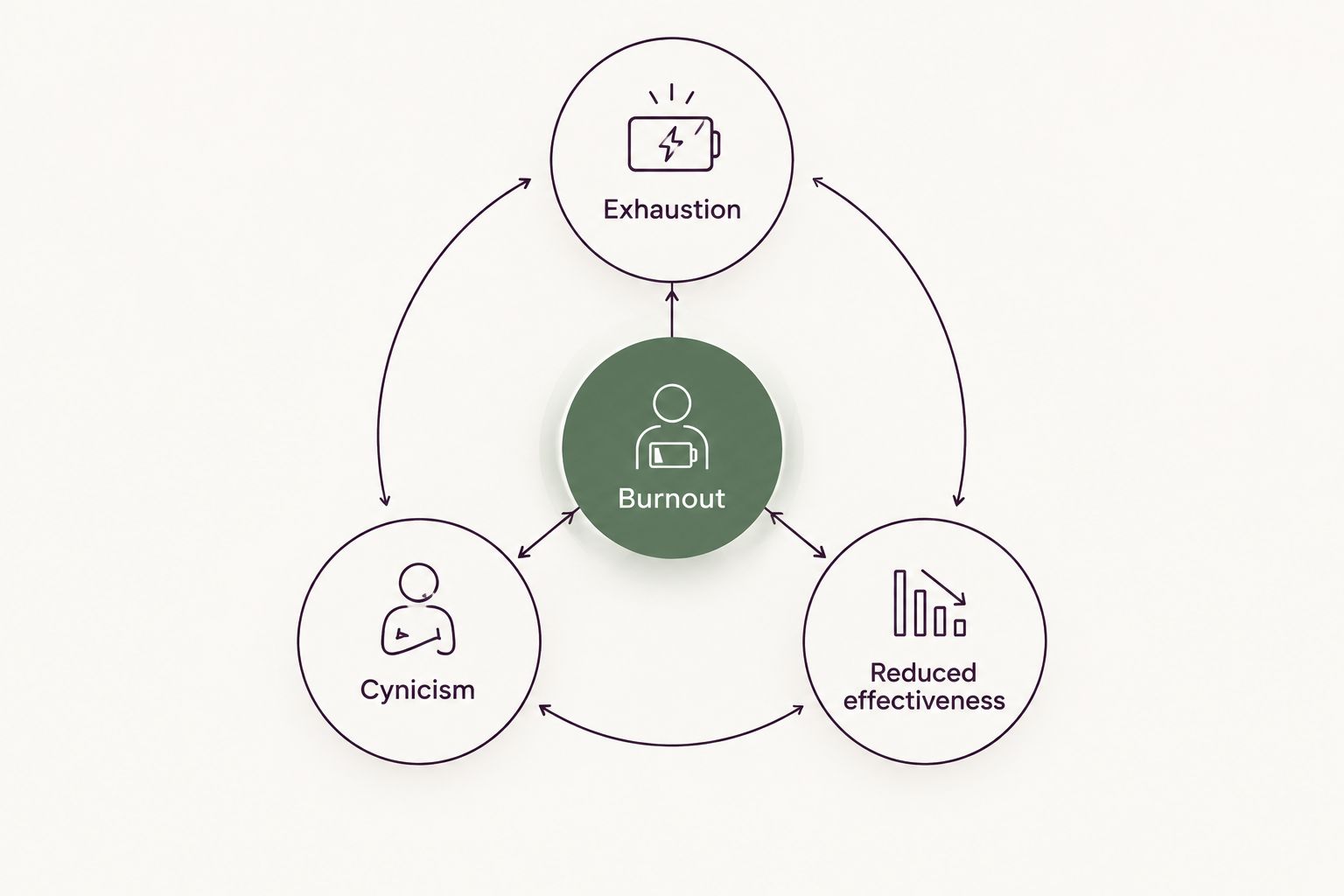
Best overall coping strategy for burnout: individual therapy using CBT or ACT. Best for immediate relief: structured sleep and rest recovery. Best free option: daily movement and time outdoors. Best for isolation-driven burnout: rebuilding peer and social connection.
What makes the best coping strategy for burnout
- Backed by controlled research, not just testimonials
- Targets a specific burnout dimension — exhaustion, cynicism, or effectiveness — instead of a vague "reduce stress" claim
- Fits into a realistic daily or weekly routine without adding to an already full plate
- Holds up after a few weeks of use, not just a same-day mood lift
- Has a clear next step if self-directed effort isn't enough on its own
At a glance: coping strategies for burnout in 2026
| Strategy | Best for | Standout feature | Key limitation |
|---|---|---|---|
| Individual therapy (CBT/ACT) | Long-term recovery, overall | Works with a clinician on the specific triggers driving your burnout | Requires a weekly time commitment |
| Structured sleep and rest recovery | Physical exhaustion | Fastest to show an energy improvement | Doesn't touch workplace cynicism |
| Workload boundary-setting | Role overload | Reduces the actual hours or tasks causing burnout | Depends on whether your workplace can flex |
| Movement and time outdoors | Free, accessible option | No cost, no appointment needed | Modest on its own for severe burnout |
| Peer and social connection | Isolation-driven burnout | Rebuilds the support network burnout tends to erode | Takes longer to arrange than solo strategies |
| Mindfulness-based stress reduction | Rumination, racing thoughts | Interrupts the cognitive loop that keeps burnout active | Needs consistent practice to see benefit |
1. Individual therapy (CBT or ACT): best coping strategy for burnout with anxiety or depression overlap
A licensed therapist works with you to identify what's actually driving burnout — workload, perfectionism, a values mismatch with your job — using structured approaches like CBT techniques for anxiety or Acceptance and Commitment Therapy (ACT). Sessions typically run weekly, in person or via telehealth, and the plan adjusts as the burnout pattern shifts. A clinician can also screen for depression or anxiety that's overlapping with the burnout, which self-help strategies can't do.
Individual therapy pros:
- Addresses root causes instead of just symptoms
- Works alongside self-directed strategies rather than replacing them
- Telehealth removes commute time, which matters when exhaustion is already high
- A clinician can catch depression or anxiety symptoms hiding under "burnout"
Individual therapy cons:
- Requires an ongoing weekly commitment
- Progress builds over several sessions, not one
- Cost varies by provider and insurance — check therapy cost in Washington before you budget
Best for: burnout that's lasted more than a few weeks, or that includes anxiety or low mood alongside exhaustion. Verdict: start with a consultation.
2. Structured sleep and rest recovery: best coping strategy for burnout-driven physical exhaustion
This means protecting a consistent sleep window, building in real recovery time (not just screen time) after work, and treating rest as non-negotiable rather than something to catch up on over the weekend. It's the fastest-acting strategy on this list because exhaustion is the dimension of burnout most directly tied to sleep debt.
Structured rest pros:
- No cost, no appointment required
- Noticeable energy shift is often the quickest of any strategy here
- Easy to combine with any other item on this list
Structured rest cons:
- Doesn't address cynicism or detachment from work
- Hard to sustain if the workload itself doesn't change
Best for: burnout where fatigue is the dominant symptom and work still feels meaningful. Verdict: start this week, alongside anything else on this list.
3. Workload boundary-setting: best coping strategy for role-overload burnout
This is the practical work of renegotiating what's actually on your plate — declining new commitments, delegating, or having a direct conversation with a manager about scope. It's the only strategy on this list that changes the input causing burnout rather than your response to it.
Boundary-setting pros:
- Targets the actual cause when overload is the driver
- Reduces recurrence, not just the current episode
- Pairs well with therapy for people who struggle to set limits
Boundary-setting cons:
- Depends heavily on whether your workplace or role allows flexibility
- Can feel uncomfortable or risky to initiate without support
Best for: burnout traced clearly to too much work, not too little recovery. Verdict: try it, but don't go in without a plan for the conversation.
4. Movement and time outdoors: best free coping strategy for burnout
Regular physical activity and time outside are among the lowest-barrier options for burnout — no scheduling, no cost, no clinical intake. The mechanism is straightforward: movement and daylight exposure affect the same stress-response systems that stay activated during chronic burnout.
Movement and outdoor time pros:
- Completely free and immediately accessible
- No wait time, no appointment
- Works as a daily habit, not a one-time fix
Movement and outdoor time cons:
- Modest effect size on its own for moderate-to-severe burnout
- Easy to skip when exhaustion is already high, which is exactly when it's needed most
Best for: early-stage burnout, or as a daily complement to therapy or boundary work. Verdict: add this regardless of what else you choose.

5. Peer and social connection: best coping strategy for isolation-driven burnout
Burnout tends to shrink a person's world — fewer check-ins with coworkers, less energy for friends, more time spent recovering alone. Deliberately rebuilding those connections, whether through a colleague, a friend, or a support group, counters the cynicism and detachment dimension of burnout directly.
Peer connection pros:
- Directly counters the isolation that deepens cynicism
- Doesn't require a clinical setting
- Often surfaces that coworkers are dealing with the same pressures
Peer connection cons:
- Takes longer to set up than a solo habit
- Harder to initiate when withdrawal is already part of the burnout pattern
Best for: burnout marked by cynicism, detachment, or a sense of going it alone. Verdict: worth the effort even though it's the slowest to start.
6. Mindfulness-based stress reduction: best coping strategy for rumination and racing thoughts
Structured mindfulness practice — not just "relaxing" but a specific, repeated attention practice — interrupts the rumination loop where burnout keeps replaying the same worries about work. It overlaps with some of the strategies covered in types of therapy for anxiety, since racing thoughts often show up in both.
Mindfulness pros:
- Directly targets the cognitive loop that keeps burnout active at night
- Can be practiced without a clinician once learned
- Complements therapy well rather than competing with it
Mindfulness cons:
- Requires consistent practice — an occasional session does little
- Doesn't change workload or role overload
Best for: burnout where the mind won't switch off even when the workday is over. Verdict: build it gradually; don't expect results from one session.
How we ranked these coping strategies for burnout
Each strategy above is scored against the same five criteria: whether it's backed by research, whether it targets a specific burnout dimension, whether it fits a realistic routine, whether the change holds up past a few weeks, and whether it has a clear next step when self-help plateaus. Individual therapy ranks highest because a licensed clinician can work across all three burnout dimensions and adjust the plan as they shift — the self-directed strategies each cover one dimension well but not all three at once. Burnout that overlaps with depression symptoms often responds to the approaches covered in evidence-based therapies for depression, which is worth reading if low mood is part of the picture.
Which coping strategy for burnout should you choose in 2026?
If you're not sure where to start, default to structured sleep and rest recovery plus daily movement — both are free, low-barrier, and address the exhaustion most people notice first. If burnout has lasted more than a few weeks, includes anxiety or low mood, or hasn't budged with self-directed effort, individual therapy using CBT or ACT is the strategy with the strongest evidence and the widest reach across all three burnout dimensions.
“Burnout doesn't resolve with a weekend off — it resolves when the mismatch between your workload and your resources actually changes.”
Talk with a Havencrest clinician
Telehealth and in-person sessions available across Washington.
FAQ
What are the best coping strategies for burnout in 2026?
Individual therapy using CBT or ACT ranks highest overall because it addresses multiple burnout dimensions at once. Structured sleep recovery works fastest for exhaustion, and movement or time outdoors is the best free option.
Is burnout the same as depression?
No. Burnout is classified in the ICD-11 as an occupational phenomenon linked to chronic work stress, not a medical diagnosis, while depression is a distinct clinical condition. The two can overlap, which is one reason a licensed clinician can help sort out which is driving your symptoms.
How long does burnout recovery take?
There's no fixed timeline — it depends heavily on whether the underlying workload or stressors actually change alongside the coping strategy. Exhaustion often eases before cynicism or detachment does, so partial improvement early on is normal.
Can burnout be treated without therapy?
Mild burnout often responds to self-directed strategies like sleep recovery, boundary-setting, and movement. Burnout that's persisted for weeks or includes anxiety or low mood typically benefits from professional support.
Does insurance cover therapy for burnout-related counseling?
Coverage varies by plan and provider, so check your specific policy or ask a prospective therapist which plans they accept before booking. Cost also depends on session format and provider, covered in more detail on the therapy cost page.
What's the difference between CBT and mindfulness-based stress reduction for burnout?
CBT works by identifying and restructuring the specific thoughts and behaviors driving burnout, usually with a therapist. Mindfulness-based stress reduction is a self-practiced attention technique that interrupts rumination, and the two are often used together.
Is telehealth as workable as in-person therapy for burnout?
Many clients find telehealth sessions practical because they remove commute time, which matters when exhaustion is already high. The right format comes down to personal preference and what's available through your provider.
When should I see a professional instead of trying self-help alone?
If burnout has lasted more than a few weeks, includes anxiety or low mood, or hasn't improved with rest and boundary changes, a licensed clinician can help identify what self-help alone is missing.
One last thing
Burnout's three-dimension model comes from Christina Maslach's research on occupational burnout, and the dimensions don't recover in sync. Exhaustion usually lifts first, which is why people often report a burst of energy but still dread logging into work for weeks afterward — that gap is cynicism lagging behind, not a sign the recovery isn't working.